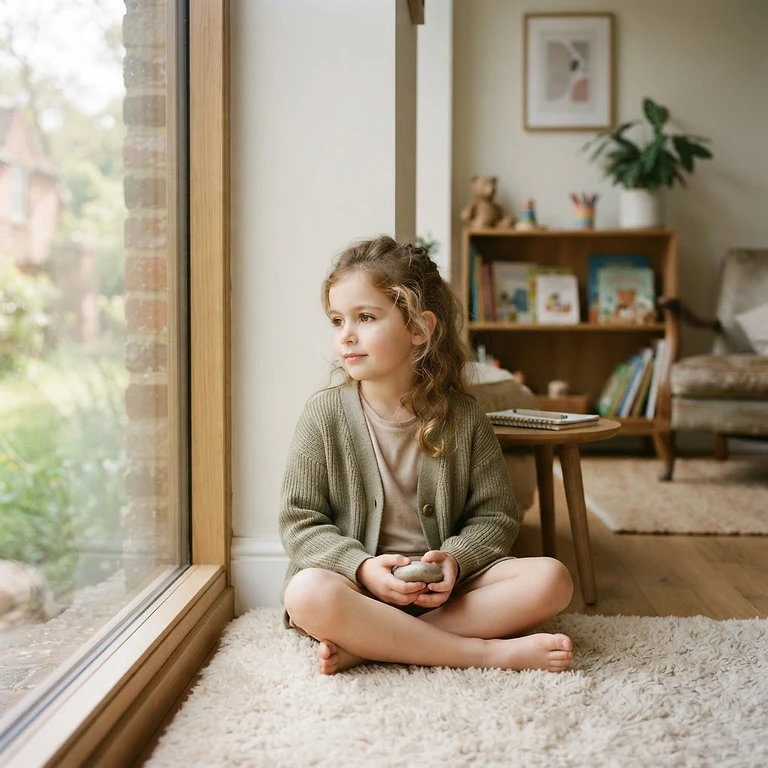
Young children do not need a packed schedule to learn and feel secure. Small, responsive moments across an ordinary day can support health, safety, connection and early learning.
Supporting a young child’s development does not require turning every room into a classroom or every activity into a lesson. The strongest foundations are often built through ordinary moments: a calm response, a shared snack, a familiar routine or a few minutes of playful attention. Additional resources on this subject are available at parenting resources.
Nurturing care brings together health, adequate nutrition, safety, responsive caregiving and opportunities to learn from birth. These parts overlap, which means one simple family habit can support several needs at once.
1. Respond before you redirect
When a child is upset, begin by noticing the feeling before explaining the rule. A short response such as “That was frustrating” does not remove the boundary. It helps the child feel understood and makes it easier to move toward the next step.
2. Build learning into real tasks
Sorting socks, washing vegetables, naming objects on a walk and counting spoons are genuine learning opportunities. Children practise language, attention and problem-solving while also feeling included in family life.
3. Protect a few predictable moments
Young children benefit from knowing what usually happens next. A repeated bedtime sequence, a regular goodbye phrase or a familiar after-nursery snack can offer security even when the rest of the day changes.
4. Make play available, not complicated
Play does not need expensive materials or adult direction. A box, a wooden spoon, paper or a made-up story can be enough. The useful part is the child’s chance to explore, make choices and invite the caregiver into the activity.
5. Notice the caregiver’s needs too
Responsive care is harder when an adult is exhausted or unsupported. Asking for help, sharing care tasks and taking a brief pause are not failures of parenting. Supporting caregivers is part of supporting children.
The goal is not a perfect routine. It is a pattern of small, repeated signals: you are safe, you are noticed, and this is a place where you can learn.